
Leukemia is a cancer of the blood that begins in the bone marrow, where abnormal white blood cells grow uncontrollably and crowd out healthy blood cells. The main types are acute myeloid leukemia (AML), acute lymphoblastic leukemia (ALL), chronic myeloid leukemia (CML) and chronic lymphocytic leukemia (CLL). Treatment depends on the type and may include chemotherapy, targeted therapy, immunotherapy, bone marrow transplant or CAR-T therapy.

Understanding leukemia
Leukemia begins in the bone marrow and leads to uncontrolled growth of abnormal white blood cells. This affects the body's ability to produce healthy red cells, white cells and platelets. Leukemia may progress rapidly (acute forms) or slowly (chronic forms), which makes early diagnosis essential.
Why early detection matters
Early detection significantly improves treatment success and survival. Patients often mistake warning signs for minor illnesses, causing delays. Persistent fever, fatigue, easy bruising, unexplained infections or bone pain should prompt a blood test and evaluation by a hematologist. Diagnosis is usually confirmed with a complete blood count, peripheral smear, bone marrow examination, flow cytometry and genetic/molecular tests.
Modern treatment
Treatment has evolved to include precision-based therapies tailored to the leukemia subtype, genetic profile and risk category. Care plans may involve multi-agent chemotherapy, targeted inhibitors (for example TKIs in CML, FLT3/IDH inhibitors in AML, BTK inhibitors in CLL), immunotherapy, monoclonal antibodies, or cellular therapies like CAR-T. Bone marrow transplant remains an option for selected high-risk cases.
Symptoms of leukemia
Signs that need prompt medical evaluation
- Persistent fever, fatigue and unexplained weakness
- Pale skin and breathlessness due to anemia
- Recurrent infections
- Easy bruising, red spots on the skin or bleeding from gums or nose
- Bone or joint pain
- Abdominal fullness from an enlarged spleen or liver
- Unexplained weight loss and night sweats
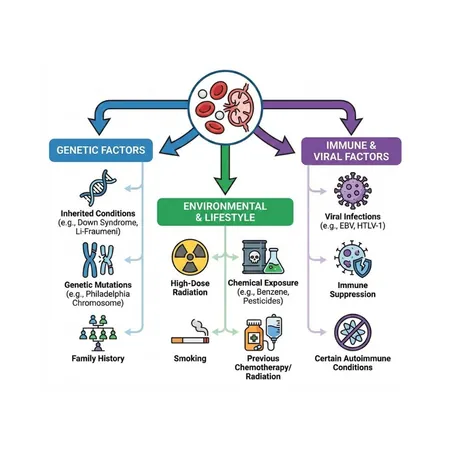
Risk factors
Genetic, environmental and treatment-related factors
- Genetic mutations affecting blood cell growth
- Previous radiation or high-dose chemotherapy
- Certain inherited syndromes
- Exposure to some chemicals such as benzene (rare)
- Pre-existing bone marrow disorders such as MDS
Treatment options
Evidence-based and personalised therapy
- Chemotherapy tailored to the leukemia subtype
- Targeted therapy (TKIs, BTK inhibitors, FLT3/IDH inhibitors)
- Immunotherapy and monoclonal antibodies
- CAR-T cell therapy for relapsed or refractory B-ALL
- Bone marrow transplant for high-risk or relapsed disease
- Supportive care: infection prevention, transfusions, growth factors
- Long-term survivorship and relapse monitoring
Leukemia care with Dr Prakash Singh Shekhawat in Jaipur
At Jaipur Hematology Centre, Dr Prakash Singh Shekhawat (DM Clinical Haematology) evaluates each patient, explains the diagnosis and options clearly, and builds a treatment plan with the family. For complex cases he works with a multidisciplinary hospital team. Bone marrow transplant and CAR-T, when they are appropriate, are provided under his care as Head of the BMT & CAR-T Program at BMCHRC, Jaipur.
Videos
Frequently asked questions
Can leukemia go into remission?
Many leukemias can go into long-term remission or be controlled for a long time. For example, most children with ALL do well with modern treatment, and many people with CML live near-normal lives on targeted tablets. Results depend on the type, genetic features, age and response to treatment.
What test confirms leukemia?
A complete blood count and peripheral smear can raise suspicion, but leukemia is confirmed with a bone marrow examination along with flow cytometry and cytogenetic/molecular tests that identify the exact subtype.
This page is for general information and does not replace a medical consultation. Treatment decisions depend on each patient's diagnosis and condition.