
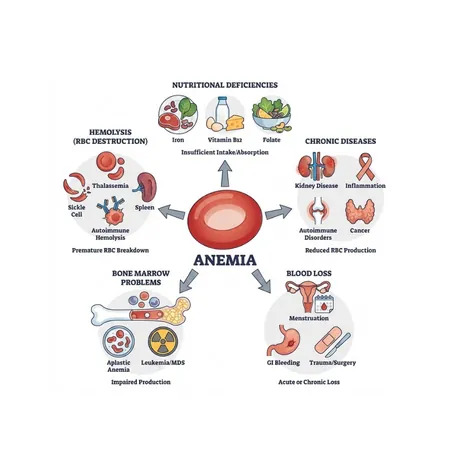
Anemia (anaemia) means the blood does not have enough healthy red blood cells or hemoglobin to carry oxygen, causing tiredness, weakness and breathlessness. The commonest cause in India is iron deficiency, but anemia can also come from vitamin B12 or folate deficiency, blood loss, chronic disease, thalassemia, hemolysis or bone marrow problems. Finding the exact cause is the key to the right treatment.

Understanding anemia
Anemia is a common blood condition that affects people of all ages. It can be temporary or chronic, mild or severe, and its impact depends on the underlying cause, which makes early evaluation essential.
Why anemia should not be ignored
Untreated anemia can affect daily life, immunity, heart function, pregnancy outcomes and overall well-being. Many people overlook symptoms, thinking it is due to stress or tiredness. Anemia often reflects an underlying issue such as nutritional deficiency, chronic inflammation, kidney disease or a genetic disorder. Identifying the cause through timely testing ensures appropriate therapy and prevents complications.
Modern approaches to anemia
Anemia can be effectively managed with treatment based on its type: iron therapy (oral or intravenous), vitamin replacement, treatment of the underlying disease, immunotherapy, or specialised care for inherited and bone marrow causes. Severe cases may need blood transfusion. Persistent or unexplained anemia deserves a hematologist's evaluation.
Causes of anemia
Common reasons for low hemoglobin
- Iron deficiency (most common cause)
- Vitamin B12 or folate deficiency
- Chronic illness (kidney disease, infections, inflammation)
- Heavy menstrual bleeding or internal blood loss
- Bone marrow disorders, including aplastic anemia and MDS
- Genetic conditions like thalassemia or sickle cell disease
- Autoimmune hemolytic anemia
Symptoms of anemia
Signs of reduced oxygen delivery
- Fatigue and generalised weakness
- Pale skin, nails and lips
- Shortness of breath on exertion
- Dizziness or light-headedness
- Rapid heartbeat or palpitations
- Headaches and poor concentration
- Cold hands and feet
Treatment for anemia
Targeted therapy based on the root cause
- Oral or IV iron for iron deficiency
- Vitamin B12 or folate replacement
- Treatment of the underlying chronic disease
- Treatment of heavy menstrual bleeding
- Blood transfusion for severe anemia
- Immunosuppressive therapy for autoimmune hemolytic anemia
- Bone marrow evaluation for complex or persistent cases
Anemia care with Dr Prakash Singh Shekhawat in Jaipur
At Jaipur Hematology Centre, Dr Prakash Singh Shekhawat (DM Clinical Haematology) evaluates each patient, explains the diagnosis and options clearly, and builds a treatment plan with the family. For complex cases he works with a multidisciplinary hospital team. Bone marrow transplant and CAR-T, when they are appropriate, are provided under his care as Head of the BMT & CAR-T Program at BMCHRC, Jaipur.
Related patient guide: How to read your CBC (complete blood count) report
Frequently asked questions
When should I see a hematologist for anemia?
See a hematologist if your anemia is severe, keeps coming back, does not improve after iron or vitamin treatment, has no clear cause, or comes with low white cells or platelets, jaundice, or swollen glands or spleen.
Can I just take iron tablets?
Iron helps only if the anemia is due to iron deficiency. Taking iron for other causes such as thalassemia trait can be unhelpful or even harmful, so get tested first.
This page is for general information and does not replace a medical consultation. Treatment decisions depend on each patient's diagnosis and condition.